Emergency Management Consulting • All-Hazards Preparedness • COOP
Executive-Ready Emergency & Continuity Plans
W3 All Hazards Consulting helps public agencies, campuses, healthcare teams, nonprofits, and private-sector leaders turn complex threat environments into clear emergency operations plans, continuity procedures, training, and improvement actions. Executive-ready emergency plans for organizations that cannot improvise under pressure.
Practical preparedness support for complex operations.
W3 combines emergency planning, continuity, training, and exercise support to help organizations turn requirements into usable plans and clear readiness actions.
Clear planning before the pressure hits.
Emergency planning is not just a binder. It is role clarity, communication, training, continuity, decision-making, documentation, and practical readiness before disruption affects people or operations.
Meet Willie Monroe, W3’s founder and senior emergency management executive →
Emergency Operations Planning
Develop, review, and improve Emergency Operations Plans, hazard annexes, response checklists, and coordination workflows that teams can actually use.
Business Continuity & COOP
Identify critical functions, continuity risks, recovery priorities, alternate operating procedures, and leadership decision points before operations are interrupted.
Training & Tabletop Exercises
Support discussion-based exercises, staff training, role clarification, after-action review, and improvement planning that moves plans into practice.
Threat & Hazard Readiness
Prepare teams for severe weather, natural disasters, workplace disruption, emergency communications failures, safety incidents, and organization-specific risks.
Support for public, institutional, nonprofit, and private-sector organizations.
Preparedness support for decision makers who need clear plans, practical guidance, and help protecting people and operations.
Government & Municipal
Emergency operations planning, COOP support, clearly defined project scopes, agency coordination, training, and improvement planning.
Education & Campuses
Campus emergency planning, staff readiness, severe-weather preparation, communications planning, and exercise support.
Healthcare & Critical Facilities
Continuity, coordination, emergency communications, essential-service readiness, and operational recovery planning.
Commercial Organizations
Business continuity, facility emergency action planning, crisis preparation, role clarity, and practical staff guidance.
Nonprofits & Community Groups
Disaster preparedness, response coordination, continuity planning, and volunteer/staff readiness for mission-critical community work.
Executive Leaders
Readiness reviews and plain-language planning that helps leaders see the gap, approve the next step, and protect people and operations.
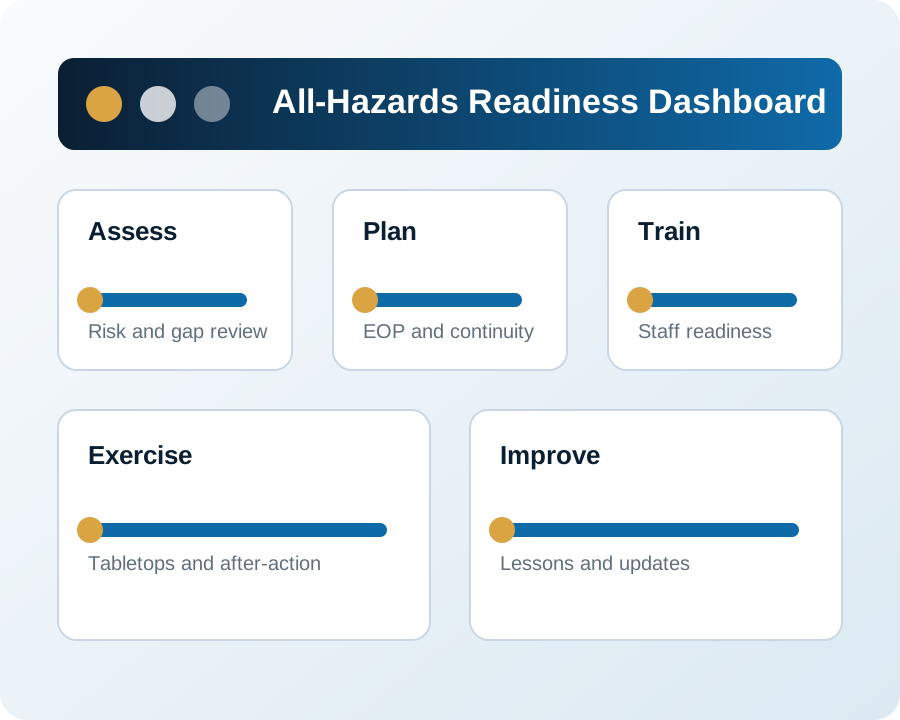
Assess. Plan. Train. Exercise. Improve.
W3 uses a practical improvement cycle that gives leaders a clear path from risk awareness to usable emergency procedures.
Explore Services- Assess: Review existing plans, roles, communication paths, continuity gaps, and threat assumptions.
- Plan: Build or improve emergency operations plans, continuity procedures, and hazard-specific annexes.
- Train: Prepare leaders and staff with clear responsibilities, planning language, and scenario-based discussion.
- Improve: Document lessons after exercises, incidents, or organizational changes so readiness keeps advancing.
Straight answers. No inflated claims.
W3 describes its work in plain language. References to FEMA, NIMS, ICS, EOP, COOP, and related emergency-management concepts describe planning alignment only and do not imply endorsement, certification, or affiliation.
Start with a readiness conversation.
Share your organization type, current planning status, and the threats or continuity concerns you need to address.